How to Know If Your Child Needs a Reading Comprehension Class, Not Just More Reading Practice

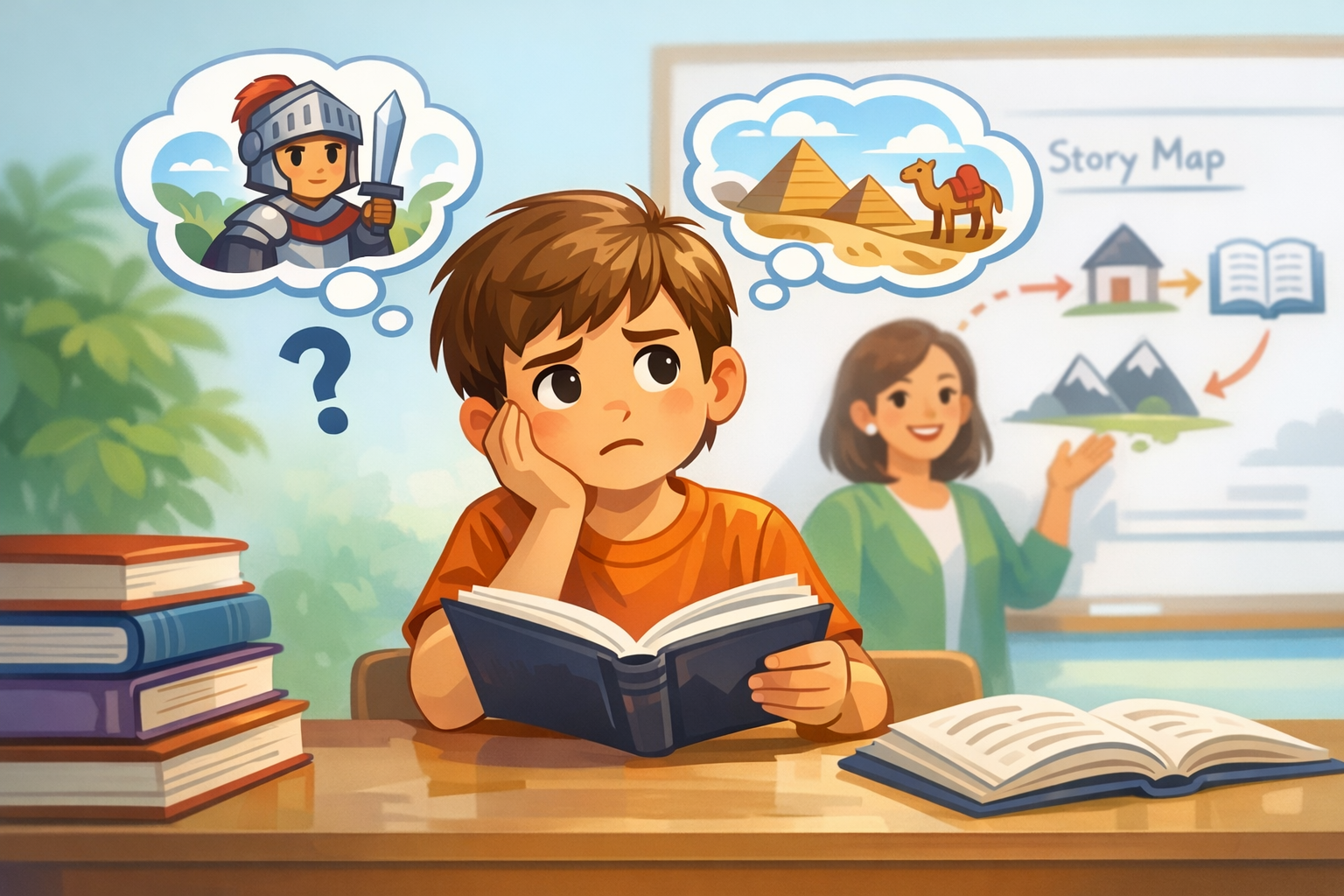
Many parents hear the same advice when a child struggles with reading: “Just have them read more.” Daily reading is important, but it does not always solve the problem. Some children can read the words correctly and still miss the main idea, forget key details, or feel lost when asked to explain what happened.
That is when the issue may not be reading practice alone. It may be reading comprehension: the ability to understand, analyze, remember, and respond to what is read. For many K-12 learners, a structured reading comprehension class can provide the strategies they need to become confident, independent readers.
Reading Fluency and Reading Comprehension Are Not the Same
A child may sound like a strong reader because they can pronounce words smoothly. This is called fluency. Comprehension, however, is about meaning. It asks: Can your child understand the text, connect ideas, make inferences, and explain their thinking?
For example, a child might read a chapter aloud with few mistakes but be unable to answer questions such as, “Why did the character make that choice?” or “What is the author trying to teach us?” In that case, simply assigning more pages may lead to frustration rather than progress.
A helpful question: After your child reads, can they tell you what happened, why it mattered, and how they know?
Signs Your Child May Need a Reading Comprehension Class
Every child has off days, but repeated patterns can signal that your child needs targeted instruction. Look for these common signs:
- They can read the words but cannot summarize the passage. Your child may finish a page and say, “I don’t know what it was about.”
- They focus on tiny details but miss the main idea. They remember a character’s shirt color but not the problem in the story.
- They struggle with “why” and “how” questions. Literal questions may be easy, while inference and reasoning questions feel difficult.
- They reread often but still feel confused. Rereading can help, but without a strategy, it may become a loop.
- They avoid reading assignments. Avoidance can come from feeling overwhelmed, not laziness.
- They have trouble explaining evidence. They may know an answer but cannot point to the part of the text that supports it.
- They do poorly on reading tests despite reading at home. Standardized and classroom assessments often require deeper comprehension skills.
When More Reading Practice Is Helpful
More reading practice can be very useful when the main challenge is stamina, vocabulary exposure, or fluency. If your child is still building word recognition or needs more time with books, consistent reading can strengthen confidence and speed.
However, practice works best when the child knows what to practice. If they are reading passively, skipping confusing parts, or guessing answers, they may repeat the same habits without improving comprehension.
When a Class Is the Better Next Step
A reading comprehension class is helpful when your child needs explicit instruction in how to think while reading. In a strong class, students learn to pause, question, predict, visualize, summarize, and support their answers with evidence.
At EiFO Academy, reading comprehension support is designed to help students move beyond “I read it” to “I understand it, and I can explain it.” This matters across subjects, not only English language arts. Science, history, math word problems, and test questions all require students to understand written information clearly.
Key Skills a Reading Comprehension Class Builds
| Skill | Why It Matters |
|---|---|
| Main idea | Helps students understand the central message instead of getting lost in details. |
| Inference | Teaches students to read between the lines and use clues from the text. |
| Vocabulary in context | Builds meaning without stopping for every unfamiliar word. |
| Text evidence | Strengthens answers by connecting opinions to specific lines or details. |
| Summarizing | Improves memory, organization, and understanding of what was read. |
Questions to Ask Before Enrolling Your Child
Before choosing a reading comprehension class, consider what your child needs most. These questions can help you decide:
- Does my child understand better when someone discusses the text with them? If yes, guided instruction may help them learn how to have that discussion internally.
- Can my child answer literal questions but struggle with deeper questions? This often points to a need for inference and analysis practice.
- Does my child know how to find proof in the text? Evidence-based reading is a learned skill.
- Is reading homework causing stress at home? A class can reduce pressure by giving your child tools and support.
- Has my child’s teacher mentioned comprehension concerns? Teacher feedback can reveal patterns seen across different assignments.
How Parents Can Support Comprehension at Home
You do not need to turn every book into a quiz. In fact, too many questions can make reading feel like a test. Instead, try short, natural conversations that encourage thinking.
- Ask, “What do you think will happen next?”
- Say, “Show me the part that made you think that.”
- Ask, “What was the most important thing in this section?”
- Encourage your child to describe a character’s problem and how it changes.
- Model your own thinking by saying, “I’m wondering why the author included this detail.”
These habits can support comprehension, but if your child continues to struggle, structured lessons may be the missing piece.
The Bottom Line
If your child is reading regularly but not understanding deeply, the answer may not be more books, longer reading sessions, or extra worksheets. They may need direct instruction in comprehension strategies.
A reading comprehension class can help your child become an active reader: one who asks questions, notices clues, explains ideas, and uses evidence. With the right support, reading can shift from a stressful task to a skill your child uses with confidence in every subject.
EiFO Academy helps K-12 students build the academic skills they need for school success, including stronger reading comprehension, critical thinking, and confidence. If your child can read the words but struggles to understand the meaning, now may be the right time to explore a comprehension-focused class.