Best Read-Aloud Books for Kindergarten and Grade 1

Kindergarten and Grade 1 are magical reading years. Children are beginning to connect letters with sounds, notice patterns in words, ask bigger questions, and develop opinions about the stories they love. At this stage, one of the most powerful things parents can do is simple: read aloud every day.
Even when children can read some words independently, parent read-aloud time still matters. It exposes children to richer vocabulary, builds listening comprehension, strengthens attention span, and creates warm family routines around books. For many young learners, the confidence to become a reader starts with the comfort of sitting beside a trusted adult and enjoying a story together.
Why Reading Aloud Matters at This Age
For K to G1 children, books are not only about learning to decode words. They are also about learning how language works, how stories are structured, and how ideas connect. When parents read aloud, children hear fluent expression, proper pacing, and the natural rhythm of sentences.
- Vocabulary grows faster: Children hear words in context, which helps them understand and remember new language.
- Comprehension improves: Talking about characters, problems, and endings teaches children to think while reading.
- Focus and patience develop: A daily story routine helps children listen for longer periods and follow a sequence of events.
- Emotional skills expand: Books help children name feelings, understand others, and discuss real-life situations safely.
- Reading becomes positive: When books feel cozy, fun, and shared, children are more likely to choose reading independently later.
A child who loves being read to is building the foundation for becoming a child who loves to read.
How to Choose Books for Kindergarten and Grade 1
The best books for this age group usually combine engaging illustrations, predictable language, humor, repetition, and meaningful themes. Some children are ready for beginning reader books, while others still prefer picture books. Both are valuable.
| What to Look For | Why It Helps |
|---|---|
| Repetition and rhyme | Supports phonemic awareness and memory |
| Clear illustrations | Helps children use visual clues to understand meaning |
| Relatable characters | Encourages discussion about feelings and choices |
| Short chapters or simple series | Builds stamina and excitement for the next book |
| Rich read-aloud language | Introduces new words beyond everyday conversation |
Recommended Books for K to G1 Kids
1. The Very Hungry Caterpillar by Eric Carle
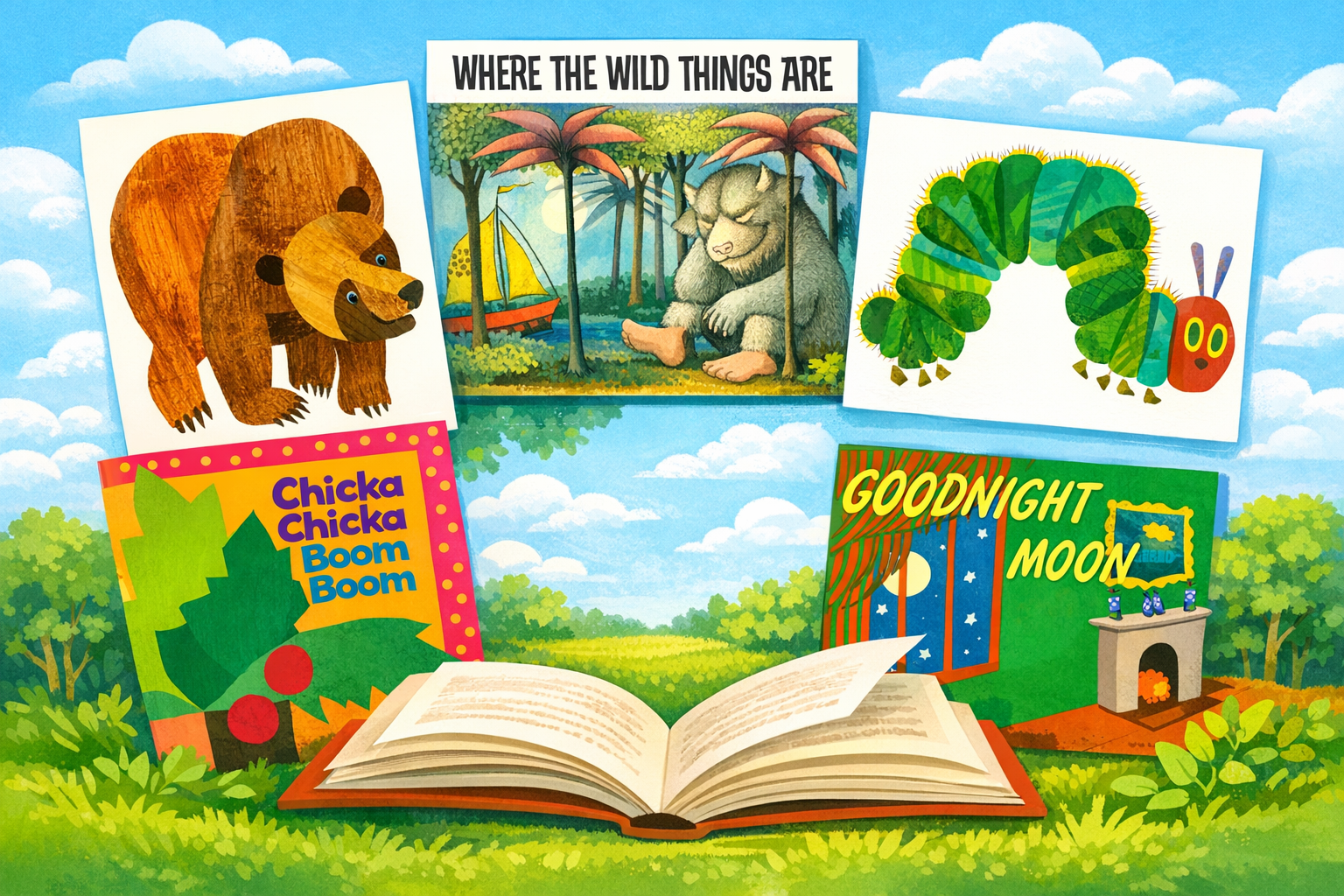
This classic is perfect for younger Kindergarten readers and new English learners. It introduces days of the week, counting, foods, and life cycles through bright illustrations and predictable storytelling.
2. Brown Bear, Brown Bear, What Do You See? by Bill Martin Jr. and Eric Carle
With repetition, color words, and rhythmic language, this book invites children to join in. It is especially useful for building confidence because children can quickly begin to “read” parts of the text from memory.
3. Where the Wild Things Are by Maurice Sendak
This story opens the door to conversations about imagination, anger, comfort, and home. The language is rich but not too long, making it a wonderful read-aloud for children who enjoy dramatic storytelling.
4. Don’t Let the Pigeon Drive the Bus! by Mo Willems
Funny, interactive, and full of expression, this book encourages children to respond out loud. It is great for teaching voice, persuasion, and the idea that readers can participate in a story.
5. Elephant and Piggie series by Mo Willems
These early reader books are excellent for Grade 1 children. The simple sentences, speech bubbles, and expressive characters make them ideal for practicing fluency, emotion, and partner reading.
6. Frog and Toad series by Arnold Lobel
Gentle, funny, and beautifully written, these short stories introduce early chapter-book structure. They are perfect for children moving from picture books toward longer reading experiences.
7. Chicka Chicka Boom Boom by Bill Martin Jr. and John Archambault
This lively alphabet book turns letter learning into a rhythmic adventure. The playful sound patterns make it excellent for children who are still strengthening letter recognition and phonological awareness.
8. Click, Clack, Moo: Cows That Type by Doreen Cronin
This humorous story introduces problem-solving, negotiation, and cause and effect. Children love the silly premise, while parents can use it to ask questions about fairness and communication.
9. Last Stop on Market Street by Matt de la Peña
This beautifully written book helps children notice gratitude, community, and perspective. It is a strong choice for building empathy and discussing how different people experience the world.
10. Mercy Watson series by Kate DiCamillo
For children ready for short chapter books, Mercy Watson offers humor, repetition, and colorful illustrations. The stories feel grown-up enough for Grade 1 readers while still being approachable.
Simple Read-Aloud Tips for Parents
You do not need to be a professional teacher to make reading time meaningful. A few small habits can turn a bedtime story or afternoon book into a powerful learning moment.
- Preview the cover: Ask, “What do you think this book will be about?”
- Use expression: Change your voice for different characters and pause at exciting moments.
- Ask open questions: Try, “Why do you think she did that?” or “What might happen next?”
- Point out words naturally: Highlight a rhyming word, a repeated phrase, or a letter your child knows.
- Let your child choose: Choice builds motivation, even if it means rereading the same favorite book many times.
- Connect stories to life: Say, “This reminds me of when we visited the park,” or “Have you ever felt like that character?”
What If My Child Does Not Sit Still?
Many young children wiggle, interrupt, or move around during stories. That does not mean reading time is failing. Keep sessions short, choose engaging books, and allow your child to hold a small toy, point to pictures, or act out parts of the story. Five joyful minutes every day is better than thirty stressful minutes once a week.
At EiFO Academy, we believe early literacy grows best when children feel curious, capable, and supported. Reading aloud at home pairs beautifully with structured learning because it gives children a real reason to care about words: words tell stories, create laughter, answer questions, and bring families closer.
Final Thought
The best book for a Kindergarten or Grade 1 child is not always the most advanced one. It is the book your child wants to hear again, talk about, laugh over, and eventually try to read with you. Start with a few of the recommendations above, make reading a daily routine, and enjoy watching your child’s language, confidence, and imagination grow page by page.