How Gamification Makes Online Learning More Engaging for K-12 Students

Online education has opened the door to flexible, personalized learning for students of all ages. But for K-12 learners, one big question remains: how do we keep children actively engaged when the classroom is on a screen?
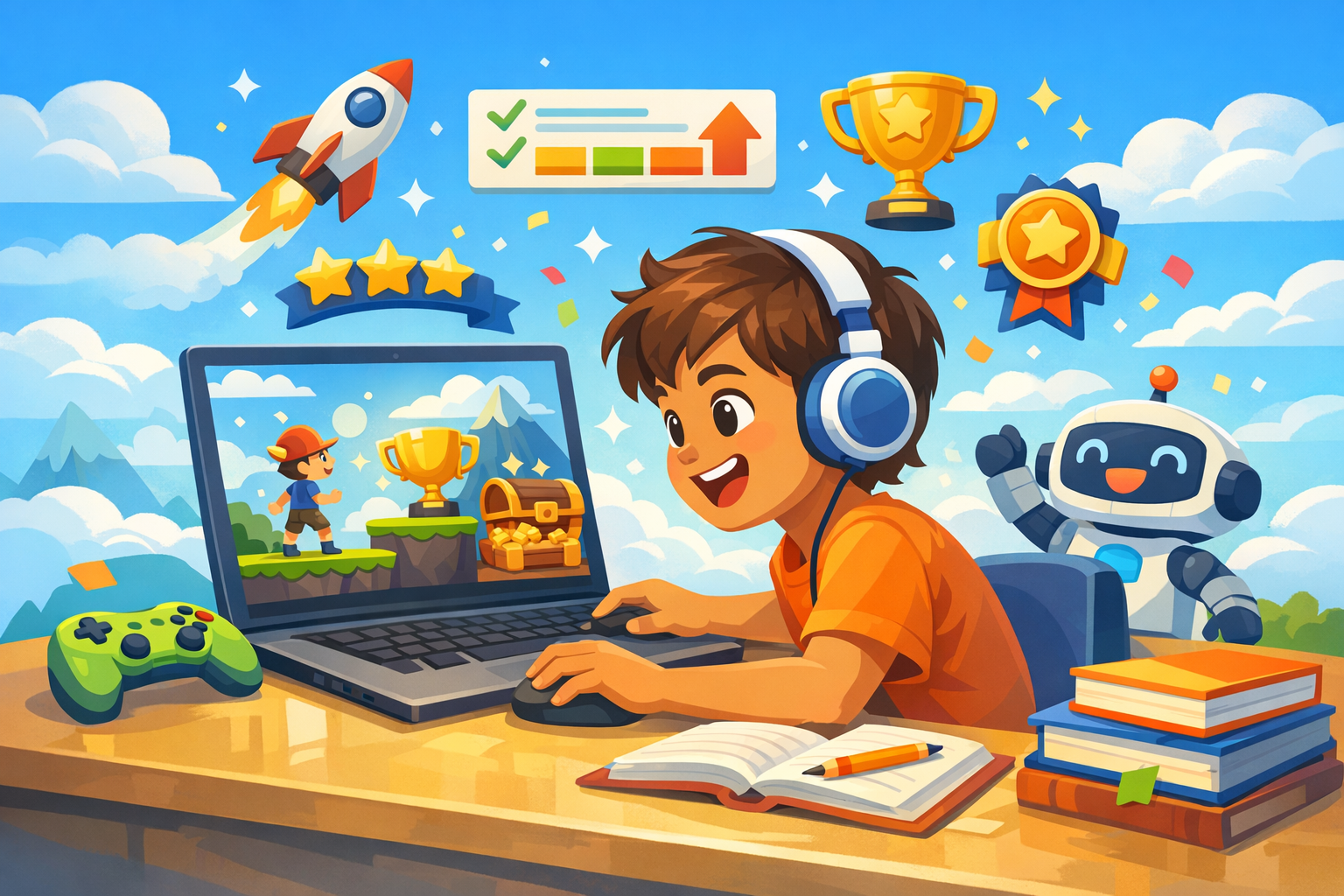
That is where gamification can make a powerful difference. Gamification does not mean turning every lesson into a video game. Instead, it means using game-inspired elements such as points, levels, challenges, badges, progress bars, and rewards to make learning more motivating, interactive, and goal-oriented.
At EiFO Academy, we believe children learn best when they feel curious, capable, and encouraged. Thoughtfully designed gamification can support all three.
What Is Gamification in Education?
Gamification in education is the use of game mechanics in a learning environment to encourage participation and progress. In an online classroom, this might include earning badges for completing assignments, unlocking new learning levels, receiving instant feedback after a quiz, or tracking progress toward a weekly goal.
The purpose is not to distract from learning. The purpose is to make learning more visible, rewarding, and interactive. When students can see their progress and understand what comes next, they are more likely to stay engaged.
Why Gamification Works Especially Well in Online Education
Online learning gives educators many tools to personalize the student experience. Digital platforms can track progress, adapt practice activities, and provide immediate responses. Gamification fits naturally into this environment because it turns learning steps into clear, achievable milestones.
For children, especially younger learners, abstract academic goals can feel far away. A long-term goal like “improve reading comprehension” may not feel exciting in the moment. But completing a story challenge, earning a reading badge, or moving up to the next level can make that same goal feel concrete and motivating.
Key Benefits of Gamification for K-12 Learners
1. It Increases Student Motivation
Motivation is one of the biggest challenges in online education. Without the physical energy of a classroom, some students may find it harder to stay focused. Gamification adds a sense of purpose and achievement to everyday tasks.
When students earn points, complete challenges, or unlock new activities, they receive positive reinforcement for their effort. This encourages them to keep going, even when the material becomes more difficult.
2. It Makes Progress Easy to See
Children are more likely to stay committed when they can see how far they have come. Progress bars, skill maps, levels, and achievement badges help students understand that learning is a journey made up of small wins.
This is especially valuable in subjects that require consistent practice, such as math, reading, writing, and language learning. A student may not notice improvement from one worksheet to the next, but a visual progress tracker can show growth over time.
3. It Encourages Practice Without Pressure
Practice is essential for mastery, but repetition can feel boring or stressful. Gamified learning can make practice feel more like a challenge than a chore.
For example, a math activity might ask students to solve problems to complete a mission. A vocabulary lesson might invite learners to collect words as they advance through a story. These small design choices can reduce anxiety and help students approach practice with a more positive mindset.
4. It Builds Confidence Through Small Wins
Confidence grows when students experience success. Gamification breaks big learning goals into manageable steps, giving children frequent opportunities to succeed.
A student who struggles with fractions, for instance, may feel discouraged by a full unit assessment. But if that same student earns recognition for identifying fractions, comparing fractions, and solving simple fraction problems one step at a time, confidence can build gradually.
When students feel successful, they are more willing to try, ask questions, and take on new challenges.
5. It Supports Personalized Learning
One of the strongest benefits of online education is the ability to personalize instruction. Gamification can support this by allowing students to move at a pace that matches their needs.
Advanced learners can unlock enrichment challenges, while students who need more practice can revisit skills without feeling left behind. This creates a learning environment where progress is based on mastery, not comparison.
6. It Improves Focus and Participation
Gamified activities often include short tasks, clear goals, and immediate feedback. These features help students stay focused because they know exactly what they are trying to accomplish.
Instead of passively watching a lesson, students become active participants. They answer questions, make choices, solve problems, and receive feedback along the way. This active involvement can lead to stronger understanding and better retention.
Examples of Gamification in Online Learning
Gamification can be simple or complex. The best approach depends on the age of the students, the subject, and the learning goal.
- Badges: Students earn digital badges for completing lessons, mastering skills, or showing persistence.
- Levels: Learners move through increasingly challenging activities as their skills improve.
- Quests: Lessons are framed as missions, such as solving a mystery, completing a science investigation, or building a virtual project.
- Points: Students collect points for effort, accuracy, participation, or improvement.
- Leaderboards: Used carefully, leaderboards can celebrate progress while avoiding unhealthy competition.
- Instant feedback: Students immediately learn whether an answer is correct and receive guidance on what to try next.
Gamification Should Support Learning, Not Replace It
Effective gamification is not about flashy rewards or constant competition. If points and prizes become the main focus, students may pay less attention to the learning itself. The best gamified experiences connect rewards directly to meaningful academic growth.
For parents and educators, the goal is to ask: does this activity help the child understand, practice, or apply a skill? If the answer is yes, gamification is doing its job.
How Parents Can Support Gamified Online Learning
Parents play an important role in helping children get the most from online education. Here are a few ways to support healthy gamified learning at home:
- Celebrate effort, not just scores. Praise persistence, improvement, and problem-solving.
- Ask about the learning goal. Encourage your child to explain what skill they are practicing.
- Set a balanced routine. Keep online learning sessions focused, age-appropriate, and followed by breaks.
- Encourage reflection. Ask, “What did you learn today?” or “What challenge did you overcome?”
- Avoid overemphasizing competition. Help children focus on personal progress rather than comparing themselves to others.
The EiFO Academy Approach
At EiFO Academy, we see gamification as a tool for deeper engagement, not a shortcut. When used thoughtfully, it can help students feel more connected to their lessons, more aware of their progress, and more confident in their abilities.
Online learning should be more than screen time. It should be an interactive experience that helps children build knowledge, curiosity, and independence. Gamification brings structure and excitement to that process, making learning feel both achievable and rewarding.
Final Thoughts
Gamification is transforming online education by making learning more engaging, personalized, and motivating for K-12 students. From badges and quests to instant feedback and progress tracking, game-inspired tools can help children take ownership of their learning journey.
When designed with purpose, gamification does more than make lessons fun. It helps students practice consistently, build confidence, and develop a positive relationship with learning—skills that can benefit them far beyond the online classroom.