What Should a 3rd Grader's Writing Look Like? A Parent's Guide

By third grade, students are moving beyond writing individual sentences. They are learning to organize their thoughts into paragraphs, develop ideas with supporting details, and revise their writing to make it clearer.
But what should a third grader actually be able to write?
5 Essential Grade 3 Writing Skills
A developing third-grade writer should be learning to:
Write a clear topic sentence. Introduce the main idea so readers know what the paragraph is about.
Add supporting details. Explain ideas with examples, descriptions, or reasons.
Organize ideas logically. Present information in an order that makes sense.
Use complete sentences. Write understandable sentences and begin varying sentence structure.
Revise writing. Improve ideas, details, and clarity—not just spelling and punctuation.
These skills develop gradually. Not every third grader will demonstrate them consistently or independently.
How Many Sentences Should a 3rd Grader Write?
There is no universal sentence requirement.
A useful practice goal is a paragraph with a topic sentence, several supporting sentences, and a concluding sentence. However, the quality of the ideas matters more than reaching a particular number.
For example:
I like playing games. Games are fun. I play with my friends.
This expresses an idea but provides little explanation.
A stronger version might be:
I enjoy playing board games with my friends because we have to think carefully and make decisions. My favorite game is Guess Who? because each question helps me eliminate characters until I discover the correct person.
The second example develops the idea with specific details.
What Does Real Grade 3 Writing Look Like?
One EiFO Academy Grade 3 student completed an explanatory writing assignment about how to play the game Guess Who?
The student's first draft included several important elements: the name of the game, materials, sequence words, and an explanation of how to win.
However, some instructions needed more explanation. A reader unfamiliar with the game might have trouble following every step.
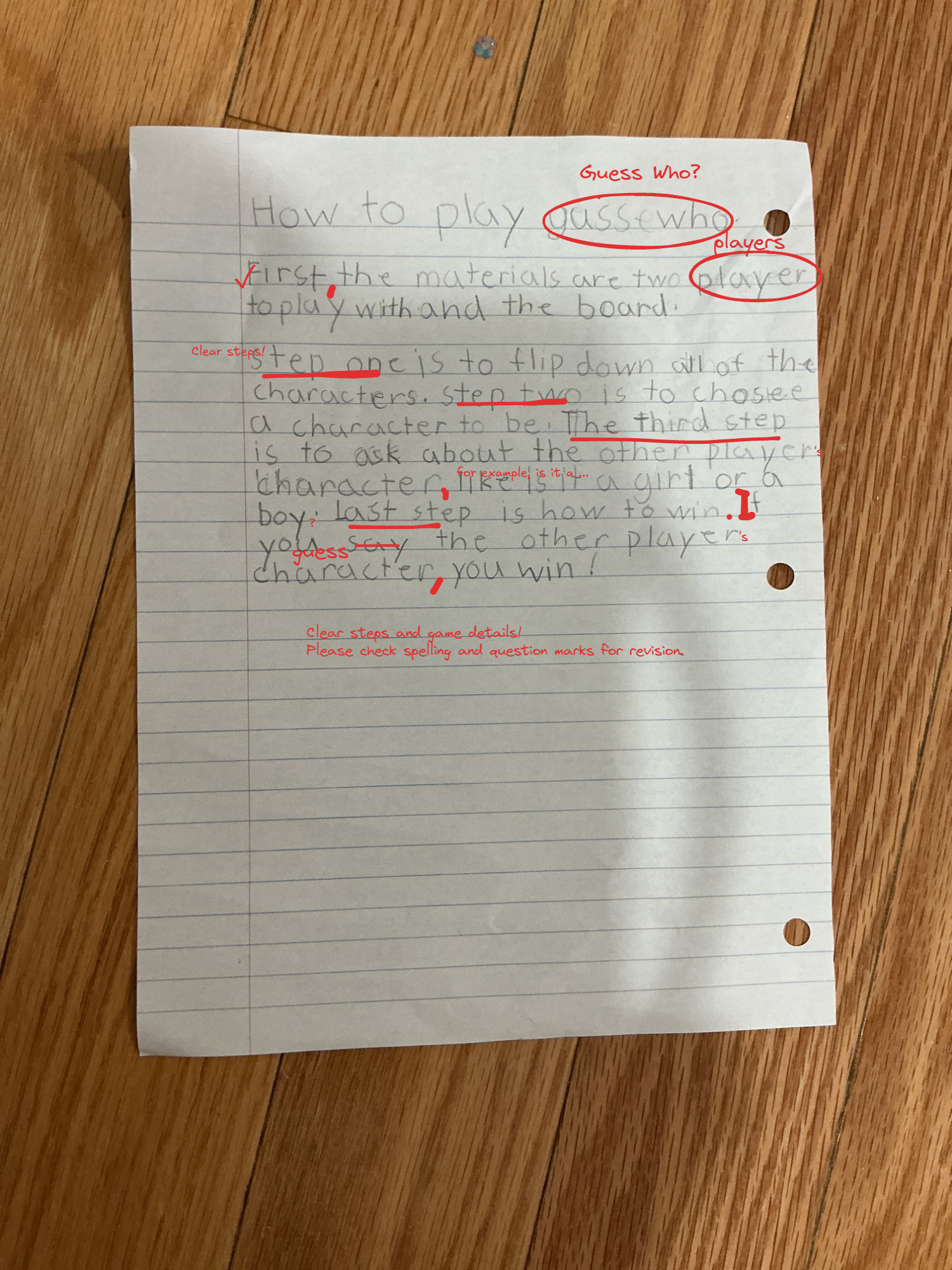
Instead of simply correcting grammar, the teacher recognized what the student did well and identified specific ways to strengthen the explanation.
The feedback encouraged the student to explain how the character cards are arranged, how players take turns asking questions, and how the game ends.
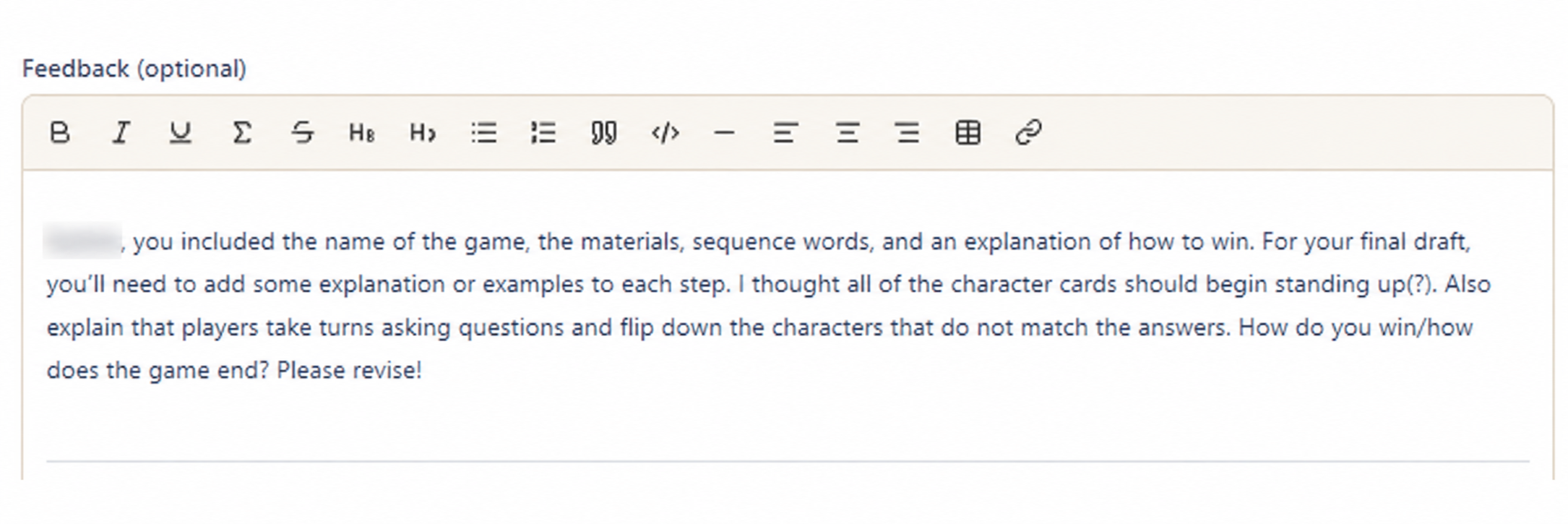
After receiving feedback, students have an opportunity to revisit their writing, add missing information, and clarify their explanations.
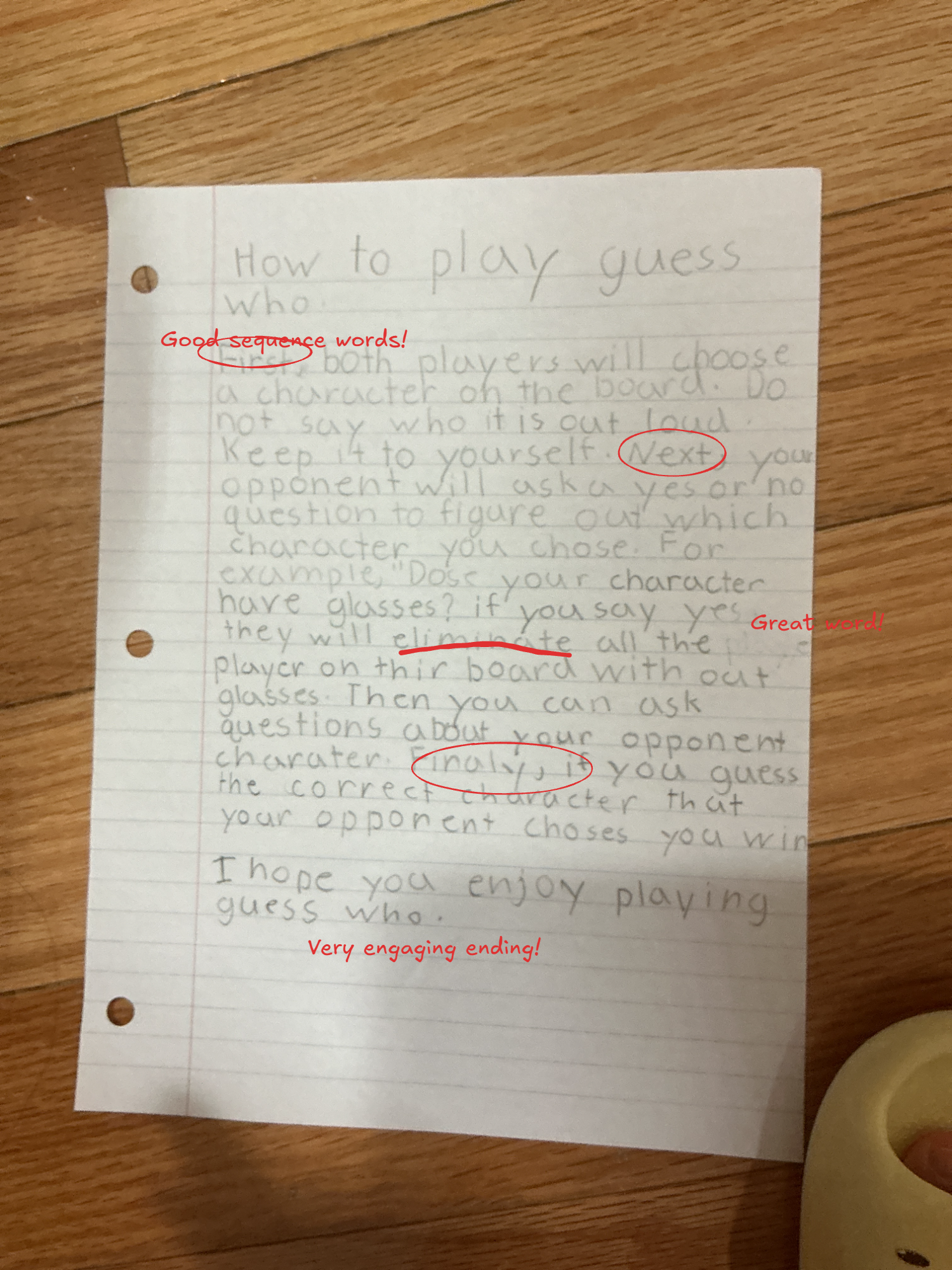
Student's final draft: Compare the two versions to see how the student responded to feedback.
The goal is not for the teacher to rewrite the assignment. It is for the student to learn how to improve their own writing.
How Can Parents Improve Grade 3 Writing Skills?
Parents can support young writers with three simple questions:
What do you mean? Encourage your child to explain an unclear idea.
Can you give an example? Help your child add meaningful details.
Would someone who wasn't there understand this? Encourage writing that makes sense to the reader.
Avoid correcting every mistake at once. Focus on one important improvement at a time.
Not Sure Where Your Child's Writing Stands?
At EiFO Academy, our Writing II Beginning program for Grade 3 students focuses on paragraph development, organization, supporting details, sentence structure, and meaningful revision.
Through small-group instruction and individualized teacher feedback, students learn to express their ideas more clearly and become more independent writers.
Explore EiFO Academy's Writing Programs: https://eifo.us/courses