My Kindergartener Knows Letter Sounds but Can't Read Words: What Parents Can Do


Your child knows the alphabet. They can recognize letters and tell you their sounds. But when they see a word like ship or chip, they struggle to read it.
Why does this happen?
Because knowing letter sounds is only the first step. Children must also learn to blend sounds, recognize spelling patterns, and understand what they read.
Reading Is More Than Sounding Out Words
Strong early reading instruction should develop four essential skills:
Phonics: Recognizing letter sounds and blending them into words.
Fluency: Reading words and sentences with increasing accuracy and confidence.
Comprehension: Understanding stories and answering questions.
Writing: Using spelling patterns and language to express ideas.
These skills work together. A child who can pronounce every word but doesn't understand the story still needs support developing reading comprehension.
What Does Effective Kindergarten Reading Practice Look Like?
Here's an example from EiFO Academy's Reading K program — Week 16: The Ship and the Chair.
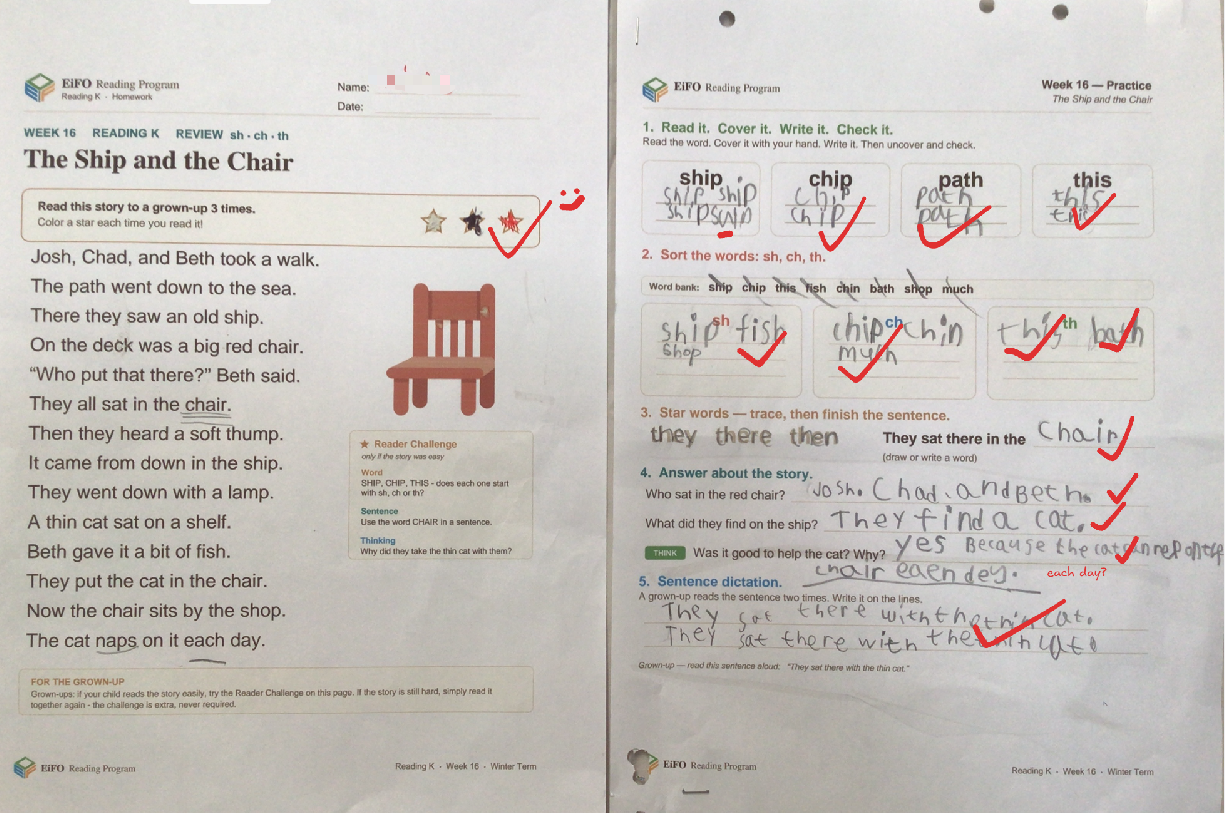
Practice sh, ch, and th spelling patterns.
Read a complete story using those patterns.
Answer questions about the characters and events.
Explain their thinking with a question such as, “Was it good to help the cat? Why?”
Write a sentence from dictation.
One assignment connects decoding → reading → understanding → thinking → writing.
That's the kind of meaningful practice that helps build a foundation for independent reading.
How Can Parents Help at Home?
Try three simple activities:
1. Blend sounds together. Practice reading short words instead of only reviewing letter sounds.
2. Ask “why” questions. After reading, encourage your child to explain what happened and why.
3. Practice a little every day. Short, consistent reading sessions are often more effective than long, frustrating ones.
Building Confident Readers at EiFO Academy
At EiFO Academy, our Reading K program combines phonics, connected reading, comprehension, and writing to help children develop foundational literacy skills.
Our goal isn't just to teach children to read words. It's to help them understand what they read and express what they think.
Explore our Reading K program at eifo.us.